


EcooGraphix is a professional and leading manufacturer/supplier of the Offset Printing and Packaging Equipment and materials in China.
With about 20 years' exporting experience,we have many partners and customers and hundreds of installations worldwide.
Our main prepress printing plate making products are full formats thermal CTP,CTCP,VLF CTP,flexo CTP,film imagesetter,CTP processor,plate punching device ,CTP plate dot densitometer and so on.
Top quality components
Most of core components are imported from worldwide leading supplier in USA, Japan and Germany.Such as ceramic drum,laser diode or laser valve head,guide screw.
Reliable technical support
Timely installation and training support;7x24 hours remote support via phone call, Teamviewer, Wechat or Whatsapp. Local service is available for emergency assistance.
Superior dot quality reproduction
1%-99% dot reproduction ;Up to 400lpi screening ,2400 dpi or 2540dpi optional
2)Fully qualified: for any thermal non-process or processless CTP plate and process plates.
3)The 256CH laser valve head makes the CTP speed up to 55PPH with screen square dots.
Proven by worldwide market
Hundreds of installations with 100% satisfaction feedback from customers.
Long warranty
EcooGraphix will provide lifetime warranty for all the CTP parts as long as the customer using Ecoo plates.
Massive production
Hundreds of CTP machines production per year; OEM supplier for leading agents in USA,Mexico,Turkey.
-
![55PPH CTP Computer to Plate Printing Machine]()
55PPH CTP Computer to Plate Printing Machine
Add to Inquiry -
![Water Washable Polymer Relief Flexo Printing Plate Processor]()
Water Washable Polymer Relief Flexo Printing Plate Processor
Add to Inquiry -
![Digital Water Washable Laser Relief CTP For Flexo Packaging Printing]()
-
![Full Automatic Online 8 Ups Thermal CTP Machine With Inline Processor And Stacker]()
-
![EcooSetter T800 Litho Printing Thermal UV CTP Plate Machine Computer To Plate]()
-
![OEM Manufacturer 1680mm VLF CTP Plate Image Making Machine With Autoloader]()
-
![Flexo Printing Digital CTP Plate Imaging Washing Exposing System]()
-
![EcooSetter CTP Printing Plate Machine For Book Printing]()
EcooSetter CTP Printing Plate Machine For Book Printing
Add to Inquiry -
![Flexo Polymer Plate CTP For Plastic Packaging Printing]()
Flexo Polymer Plate CTP For Plastic Packaging Printing
Add to Inquiry -
![Photopolymer CTP Image For Flexo Packaging Printing]()
Photopolymer CTP Image For Flexo Packaging Printing
Add to Inquiry -
![Factory Of Wide Format VLF CTP Plate Making Machine]()
Factory Of Wide Format VLF CTP Plate Making Machine
Add to Inquiry -
![A1 Book Printing CTP Plate Making Machine OEM Factory]()
A1 Book Printing CTP Plate Making Machine OEM Factory
Add to Inquiry
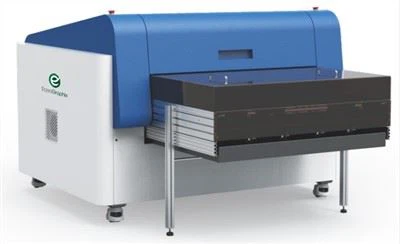


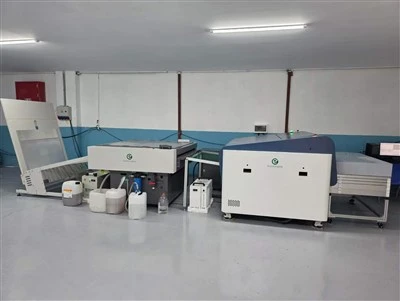


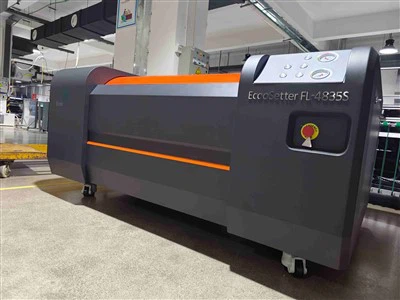


CTP types and difference
Manual Thermal CTP/CTCP
T/UV 400E/S/F (laser diodes): max plate size 800*690mm
T/UV 800E/S/F(laser diodes): max plate size 1163*940mm
Online 8up Thermal CTP/CTCP
T/UV 800EA/SA/FA/XA (laser diodes) with optional single cassette autoloader
T800QE/S/H (laser diodes) with online autoloader ,bridge and optional punching unit
T800QF/V/X(256CH laser head) with online autoloader,bridge and optional punching unit
VLF thermal CTP/CTCP
T/UV 1600S/SX: max plate size 1470*1180mm
T/UV 1600M/MX: max plate size 1680*1350mm
Flexo CTP
FL400/600/800(laser diode)
FL4835/5080(256CH laser valve head): max plate size 1270*2032mm
Thermal/UV CTP Processor
P900E/P1250E/P1500E
Flexo CTP Processor
FP600/900/1200
Advantages of CTP plate making square screen dots

T800Q CTP breaks through the limitations of traditional optical fiber technology and divides a laser beam into 256 small laser channels that can be independently controlled, doubling the plate making speed. The 256-channel small laser scan produces square light spots on the printing plate. The energy distribution is in the shape of a rectangular step. The edges of the light spots are sharper and the image is clearer. It is 10 times more accurate than the 200lpi amplitude modulated dots and the color saturation can be increased by 21%.
Ecoosetter T800Q CTP uses a single light source laser and the 256-channel laser external modulation platform is independently . It is the only optical platform in China that adopts spatial light modulation technology and uses a single laser. Different from the current machines that use optical fiber optical path principles, the linear beam is divided into 256 small laser beams through a light valve device. The scanning produces a rectangular light spot on the printing plate. The rectangular light spot has sharp edges.

Difference of CTP laser diodes and laser valve head
Compared with fiber optic technology, it is easier to control the average energy of each optical path and the dot quality is more consistent, so the printing quality is guaranteed. In terms of accuracy, this technology can break through high-precision requirements, with fine light spots that can reach 12800dpi. It can achieve satisfactory results when applied to high-demand special printing. Using a single light source laser, coupled with the flexibility of light source energy selection and stable power control, more equipment with different output speeds can be provided to meet different customer requirements.
Rectangular dot imaging technology, the fineness and accuracy are increased by 10 times. The 256-channel laser external modulation technology is a square light spot, and the energy distribution is in the shape of a rectangular step. In this way, the edge of the light spot is sharper and the image is clearer. The fineness and accuracy of the 200lpi AM dots are improved by 10 times. times, color saturation can be increased by more than 21%. At the same time, the 256-channel laser external modulation technology can accurately match the resolution of the actual document , so that the length-to-width ratio of the rectangular dots can be adjusted to achieve perfect variable resolution printing.
The 256-channel laser external modulation technology breaks the limitations of traditional CTP fiber technology and can generate 180-320 laser beams at the same time, increasing the plate making speed to 2 times; the 256-channel laser external modulation technology achieves rapid plate making while reducing the drum speed to 300-500 revolutions per minute, only 30%-50% of the CTP speed of traditional optical fiber technology. The CTP equipped with a 256-channel laser external modulation platform and low rotation speed make the equipment stable, low energy consumption, and less wear-and-tear.


CTP plate (Computer to plate): Directly from the computer to the printing plate, that is, "offline direct plate making". It was first developed from photographic direct plate making, all using computer-controlled laser scanning imaging, and then printing plates through processes such as development and fixation. This technology eliminates the intermediary medium of film, allowing text and images to be directly converted into numbers, reducing quality loss and material consumption in the intermediate process.
CTP plate making is suitable for the production of plate graphics and text before printing such as offset printing (paper packaging, metal can imaging), flexo printing (mainly trademarks, labels), etc.
It can be operated with the computers, CTP plate making machine , and CTP processor plate developing machine and RIP software. After 2018, the non chemical processless CTP plates were launched, which is more environmentally friendly and convenient,saving the CTP processor and developer chemical.
The CTP plates are divided into thermal plate, UV CTP or CTCP and violet CTP plate. Due to the different photosensitive coating of the printing plate, the machines are also divided into thermal CTP,UV CTP and Violet CTP. There are many choices of machines with stable thermal coatings, and there are also many choices of UV machines because of their competitive price. However, the price difference of thermal plate and CTCP plate is much smaller,and fewer supplier of the violet CTP plate,the thermal CTP gets more popular and gains the most market.
Applications and advantages of flexographic CTP
Today, flexographic CTP has been applied to printing of different sizes in packaging, wallpaper, beverage boxes and other fields, and its quality has been widely recognized.
Flexographic printing is one of the most commonly used printing methods at present, because traditional printing methods have their own characteristics. As a relatively new printing industry in China, flexographic printing has achieved considerable development in recent years. The water-based ink used in flexographic printing is an environmentally friendly printing method that does not cause a lot of pollution like gravure printing. Relatively speaking, the cost of flexo printing is relatively low, and the printing volume is large. It is suitable for printing on sheet paper and roll materials of different materials. It is most suitable for packaging printing, various labels and large-area substrates.
The range of printing materials is relatively wide, such as paper, plastic film, aluminum foil, self-adhesive paper, etc.
For computer documents, digital proofs or blue paper patterns, the corresponding dot expansion compensation curve is adjusted according to the printed fingerprint. The imagesetter outputs the negative film, and the printing machine exposes the back of the traditional flexo photopolymer plate and evacuates the front of the plate to the film. After the film is combined, the film surface is exposed for the main exposure. After removing the film, the plate is put into a plate washer. The plate is washed with a solution. The plate is dried and post-processed with UVA, UVC, etc. After checking the size and modifying the edges, the traditional flexographic printing plate production is completed.
First, use a computer to create the graphics, images, text, etc. to be engraved. Then special computer imaging software will convert the graphic information of the original into executable relevant parameter data such as depth, size and shape for modulation of the laser beam. The control system then controls the movement of the laser beam according to the command. The laser acts on the surface of the material and uses the power of the laser to ablate graphic information into dots. After the ablation, the dot residues are processed by a special device.
Computer document → digital proofing or blue paper pattern → exposure of the back of the digital flexo plate by the printing machine → main exposure of the digital plate on the front of the flexographic CTP → put it into the traditional plate washer → wash the plate with solution → dry the plate and UVA , UVC and other post-processing → Check and complete digital flexographic printing plate production.
Characteristics of flexo CTP
Currently, the flexographic direct-to-plate making equipment that everyone is familiar with is a system that uses argon ion (Yag) laser imaging . It uses digital signals to direct the YAG laser to generate infrared rays, which are coated with a black synthetic film. On the photopolymer plate, the black film is ablated by laser to form a negative image, and then the same processing steps as exposure, rinse, drying, and post-exposure are performed as in traditional plate making methods to make a flexographic plate. The other is a system that uses laser diode imaging. It has both optical fiber transmission and laser tube array . The plate making principles of the two types of equipment are basically the same.
The plate material for direct flexographic printing consists of a resin base, a photosensitive resin layer, a black laser absorption layer on the photosensitive layer, and a protective sheet. The photosensitive resin layer is the same as an ordinary flexographic plate, and the black laser absorption layer can be ablated by laser. It is removed, exposing the photosensitive resin layer below. The ablated laser absorption layer acts as a film, so no film is needed, and there is no need to vacuum when printing.
There are following advantages of the flexo CTP :
Can reproduce dots from 1% to 99% when printing;
Effectively control the expansion of small outlets.
Reproduce intermediate dots stably.
The details in highlights and shadows are preserved, and both flat and gradient screens are very smooth.
UV printing machines and developing machines are also needed, so investment in existing equipment will not be wasted.
Effectively shorten the plate making cycle;
Special technology of flexo CTP
Hybrid flexographic screening technology uses frequency modulation screening technology to screen the highlight parts of the image (less than 10% to 15% of dots), and uses traditional amplitude modulation screening in the mid-tone and dark parts (more than 15% of dots). Network technology screening. The size of FM screening dots is about 50 microns. After screening using Hybrid technology, the tips of dots with a diameter of only 50 microns will have relatively large wear during plate development and brushing, so they will also be lower than the average height of large dots, thus effectively Reduce the expansion of outlets.
In the 1%-10% highlight and 90%-99% dark areas, the special screening technology uses fixed-sized dots to achieve the reproduction of tone changes by changing the density of the dots; while in the 10%-90% The mid-tone reproduces the tone by changing the dot size like AM screening, which is called MaxTone. Originally tailored for flexo printing, the technology can now be used with any printing process. Kodak launched MaxTone screening technology, which allows users to define a micron-level minimum mesh dot size, and allows the screening engine to remove mesh dots in a random manner while ensuring that each dot is larger than the specified dot, so as to Maintaining the integrity of the entire tone so that highlights can be reproduced very well is HyperFlex technology, and MaxTone is currently an option for the Prinergy Packaging Edition workflow.
In addition, in terms of pre-press trapping processing, some improvements can be made when using the CTP plate making method. Leak trapping is mainly a process designed to compensate for the registration error of the printing press, but leak trapping also brings another undesirable result, that is, it will change the original design plan in small local areas. For example: if there is 0.15mm overprinting at the junction of the magenta block and the blue block, a purple line with a width close to 0.15mm will be produced where the two color blocks are adjacent, which is not acceptable to customers for some products with higher requirements. accept. In the CTP process, we can take advantage of the large slope of the CTP printing plate support base and the clear edges of the printing lines to adjust the thickness of the registration lines of the entire set of color plates. That is, the registration lines of the CTP plate will be changed from those commonly used in traditional printing plates. 0.1mm is improved to 0.05~0.07mm, and the overprint in the job can be adjusted accordingly to about 0.07~0.1mm.
With the digitization of the prepress field and the improvement of flexographic CTP technology, as well as the continuous development of mechanical roller precision and laser technology, sleeve technology in the field of flexographic plate making is gradually becoming mature. Sleeve technology is essentially an extension of CTP technology in flexographic printing. If the printing plate is made on the sleeve, the flexographic plate can be produced on the printing press. And using this method can achieve accurate positioning of the laser beam, achieve good overprinting and continuous seamless printing, thereby effectively saving time and a large amount of tube paper.

FAQ
Q: What are your main products ?
Q: Is there any certification for your CTP machine?
Q: Can you also supply the Workflow and RIP?
Q: Where is your factory?
Q: What is the production time?
Q: What is the warranty time for the machine?
Q: What is the payment term?
Q: What supporting device should we prepare before installation?
Q: What about the Installation and after-sales technician support?
As one of the most professional printing plate machine manufacturers and suppliers in China, we're featured by good service and competitive price. Please rest assured to buy high quality printing plate machine in stock here from our factory. Contact us for customized service.
