Flexo Polymer Printing CTP Plate
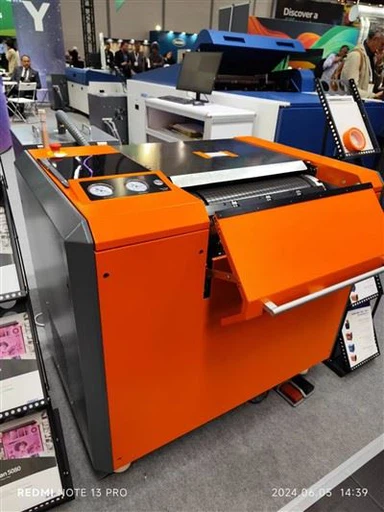
Traditional analog flexo plate making relies on film exposure imaging, while common flexo CTP direct plate making uses laser ablation black film imaging. The images can be engraved on the flexo plate by CTP laser, through computer to plate, controled by the RIP software.
- Fast Delievery
- Quality Assurance
- 24/7 Customer Service
Product Introduction
Digital Solvent Flexo Printing Plate
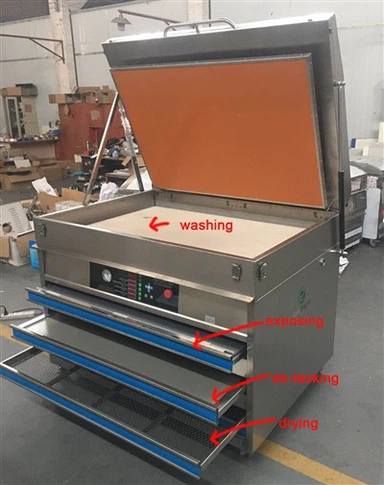
Following digital imaging via film exposure or a CTP plate-making system, flexible resin photosensitive plates must undergo a series of processing steps-including back exposure, main exposure, washing, drying, and post-treatment-to become printable printing plates.
1. Exposure Unit
(1) Back Exposure
The plate is placed in the exposure drawer with the support film facing up and the protective liner facing down. It is then exposed to UV-A light, which passes through the support film to initiate polymerization of the photosensitive resin layer. This step is essential for forming a stable base layer and establishing the foundation for the relief.
The optimal duration for back exposure is determined through standardized testing.
(2) Main Exposure
During main exposure, the plate is placed with the support film down. The protective liner is removed, and a negative film carrying the image content is placed directly onto the photosensitive resin. A vacuum film is then applied, and air is evacuated to ensure intimate contact between the film and the plate surface. UV-A light passes through the film, causing the exposed areas of the resin to cross-link and form the latent relief image.
Key factors in this stage include the optical density of the film and the effectiveness of the vacuum draw. High film density ensures complete blockage of UV light in non-image areas, while a strong vacuum minimizes residual air that can cause halation or loss of detail.
The main exposure time is also determined through testing.
Flexographic Plate Imaging Methods
Traditional flexo plate-making relies on film-based exposure, whereas modern flexo CTP systems often use laser-ablated mask technology for direct digital imaging.
2. Washing Unit
After exposure, the plate undergoes a washing process to remove uncured resin-that is, areas not polymerized by UV exposure. The washing solvent dissolves the unexposed resin, leaving behind the cross-linked relief that constitutes the printing image.
To ensure high-quality plate output, automated washing equipment must meet the following requirements:
The washing solvent-typically a blend of n-butanol and tetrachloroethylene, with a specific gravity of approximately 1.418-should be maintained at a constant temperature of around 20°C. Temperature consistency is critical across different operational environments.
The equipment should allow adjustable brush speed and wash time to accommodate various plate types. Brush height must also be adjustable to suit different plate thicknesses.
The system should automatically detect plate length and correspondingly control brush movement and solvent circulation.
Brushes must be of appropriate hardness: neither too soft, which would compromise cleaning effectiveness, nor too hard, which could damage the plate surface.
The unit should include automatic preheating and drying functions, typically at around 60°C, to ensure plates are free of residual solvent upon removal.
An automatic fresh solvent replenishment system is necessary to maintain washing performance, ensuring clean non-image areas and sharp graphic details.
The washing unit must be well-sealed and equipped with negative pressure ventilation to capture volatile organic compounds, ensuring a safe and environmentally controlled workspace.
Normal flexo plate format:
762x1016mm(30x40in)
1067x1524mm(42x60in)
1270x2032mm(50x80in)


EcooGraphix Flexo CTP Strength:
1. Effortless Operation
Plate loading is remarkably simple and efficient. Just position the plate and press a single button; the system completes the entire loading process within seconds, minimizing operator intervention and setup time.
2. Dynamic Auto-Focusing
This system accommodates a wide range of plate thicknesses, from 0.15mm to 1.7mm, without manual adjustment. Its dynamic auto-focus mechanism continuously maintains optimal focus during operation, guaranteeing consistently sharp dot reproduction and superior imaging quality.
3. High-Speed Auto-Balancing System
Featuring an automatic drum balancing system that calibrates the position of balance blocks in under 5 seconds. This ensures perfect stability even at maximum rotational speeds, which is crucial for vibration-free performance and high-quality output.
4. Automatic Laser Channel Redundancy
To maximize uptime, the machine incorporates an intelligent laser channel switch. In the event of an individual laser channel failure, the system automatically re-routes output to the longest available continuous working channel, allowing production to continue uninterrupted.
5. Linear Motor Drive
The use of a linear motor drive translates to superior performance: it provides higher positioning accuracy, a simpler mechanical structure with fewer moving parts, and enhanced long-term reliability compared to conventional systems.
6. Extended Lifespan & Warranty
Key components are built for endurance, most notably the lasers which boast a service life exceeding 10,000 hours. This is backed by a comprehensive warranty on spare parts, ensuring low cost of ownership and long-term operational reliability.


|
Model |
FL-600SM FL-600EM |
|
|
Laser Channel |
32CH |
16CH |
|
Output Speed |
2.5 m2/h |
1.25 m2/h |
|
Max.Breadth |
26'' x 17''/680mm x430mm |
|
|
Min. Breadth |
100mmx100mm |
|
|
Plate Type |
Heat corrosive film, Digital relief flexo plate(water-wash) ,digital flexo plate(solvent-wash),steel based digital plate(water/alcohol washable) |
|
|
Plate Thickness |
0.15mm - 1.7mm |
|
|
Application |
Label and trademark |
|
|
Resolutions |
4000dpi |
|
|
Plate Loading |
Manual load and unload |
|
|
Interface |
USB2.0 |
|
|
Focus Adjust |
Fixed focus |
|
|
Laser Power |
High-power semiconductor laser diode |
|
|
Device Size |
1087x770x1000 |
|
|
Net Weight |
400KG |
|
|
Power |
Single phase: 220V/50HZ, 60HZ/3KW |
|
|
Environment |
Recommended temperature: 18-30℃ humidity: 10%- 80% |
|
|
Model |
VULCAN-5080S |
VULCAN-5080F |
|
Exposing Mothod |
External Drum |
|
|
Imaging System |
1064nm filber laser device (H256 heads) |
|
|
Throughput |
3 sqm/hour at 5080 dpi |
5 sqm/hour at 5080 dpi |
|
50*80 inch, takes 45 minutes |
50*80 inch, takes 30 minutes |
|
|
Exposing Size |
Max.size 1270*2032mm, min. Size 200*200mm |
|
|
Media Type |
Dry ablation film, Digital water washing letterpress plate. Digital water washing flexo plate, Digital solvent washing flexo plate |
|
|
Plate Thickness |
0.140mm to 6.35mm |
|
|
Resolution |
5080DPI (compatible with 2540DPI) , can extend to support 10160DPI |
|
|
Plate Loading |
Automatic/Manual plate loading |
|
|
Net Weight |
2500kg |
|
|
Machine Size |
2970*1705*1537mm (L*W*H) |
|
|
Power Supply |
Three phase voltage: 380V, Max. Power (peak value) 16 kw |
|
|
Operation |
recommended:15-30℃, Max.21-25℃, humidity:40-70% |
|
5080 Computer To Flexo Plate system adopts the latest development of H256 laser head technology.
A full size of 50 inch×80 inch plate output only needs 30 minutes.
Digital Flexo CTP Plate making process
First, use a computer to create the graphics, images, text, etc. to be engraved.
Then special computer imaging software will convert the graphic information of the original into executable relevant parameter data such as depth, size and shape for modulation of the laser beam.
The control system then controls the movement of the laser beam according to the command. The laser acts on the surface of the material and uses the power of the laser to ablate graphic information into dots.
After the ablation, the dot residues are processed by a special device.
Advantages of laser direct engraving of flexo printing plates
(1) There is no need to dry and rinse, which saves a lot of money and reduces costs.
(2) Save plate making time
(3) The engraving quality is stable and easy to control, and there will be no printing plate expansion without plate washing.
(4) Eliminating a large amount of auxiliary equipment and reducing investment
(5) The engraving dots are sharper and steeper than traditional dots, and the dots are round. High contrast and small dot increase rate.
(6) The entire work process is fully digitalized, and the industrial process is greatly simplified. Quality control is also easier to achieve.
Other Equipment needed for flexo plate making:
Flexo Plate Back Film Exposing machine

Flexo Plate Washing Machine

Flexo Plate Light Treatment Dring Machine

Flex Plate All In One Processor

Hot Tags: flexo polymer printing ctp plate, China, suppliers, manufacturers, factory, customized, price, in stock